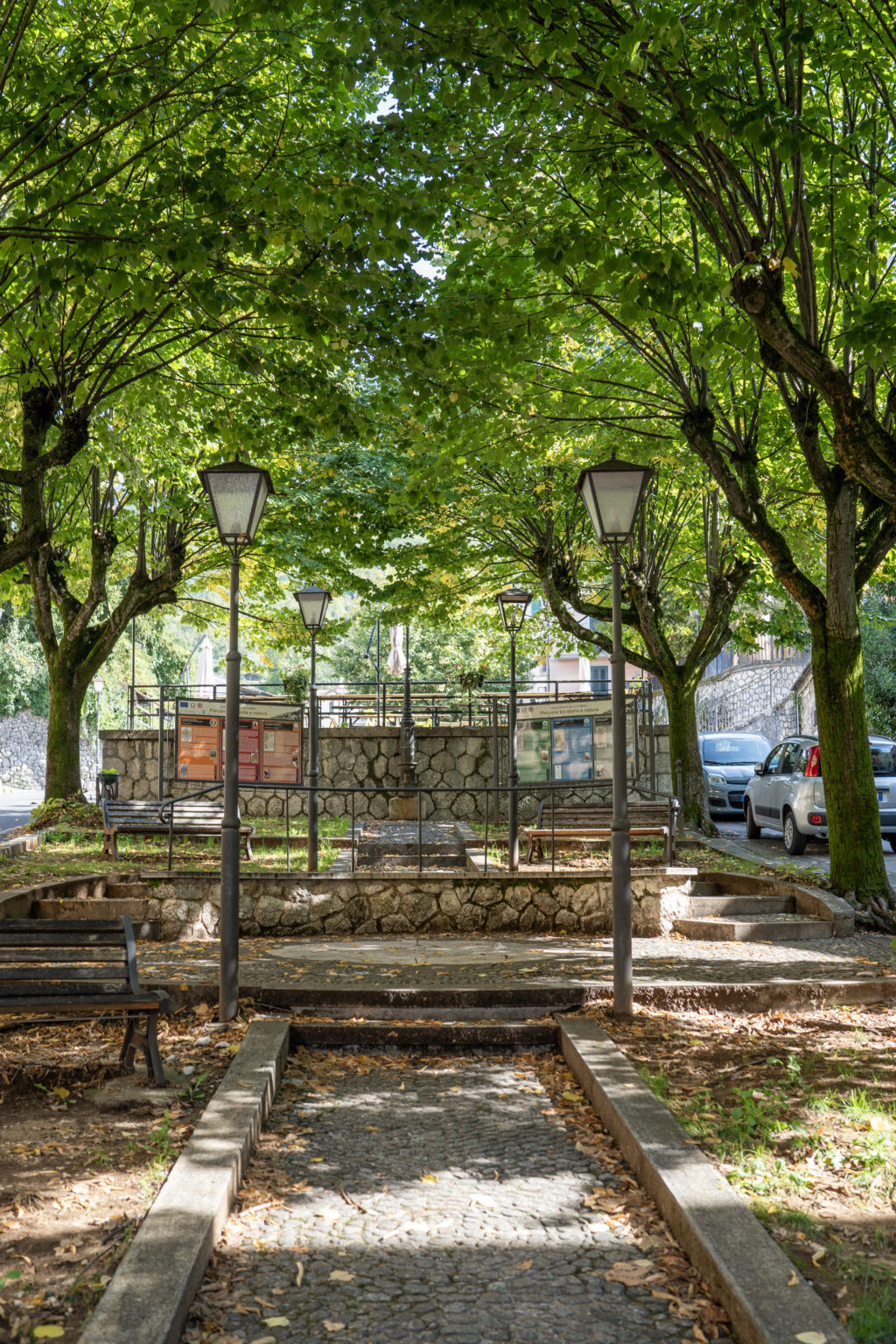
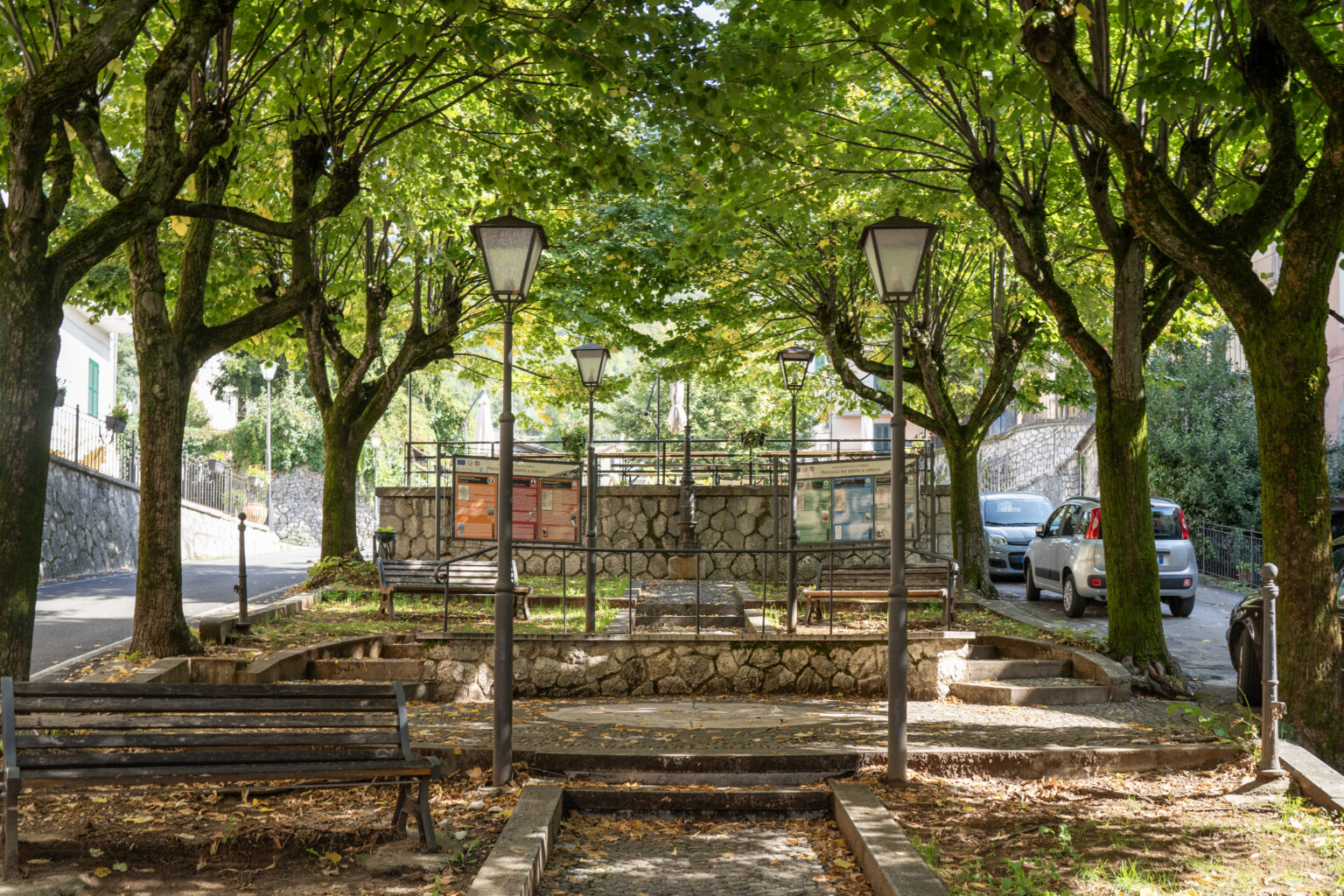
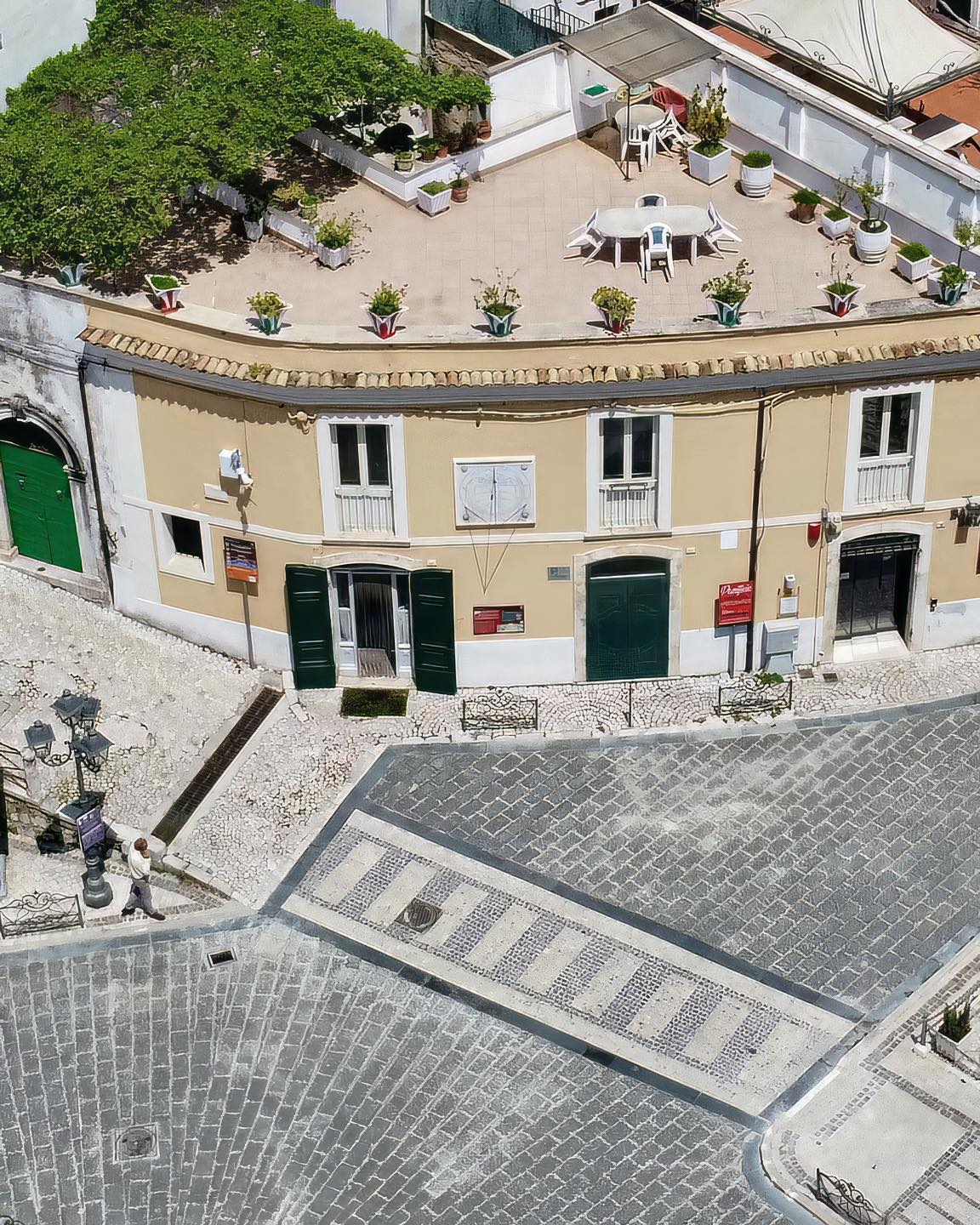
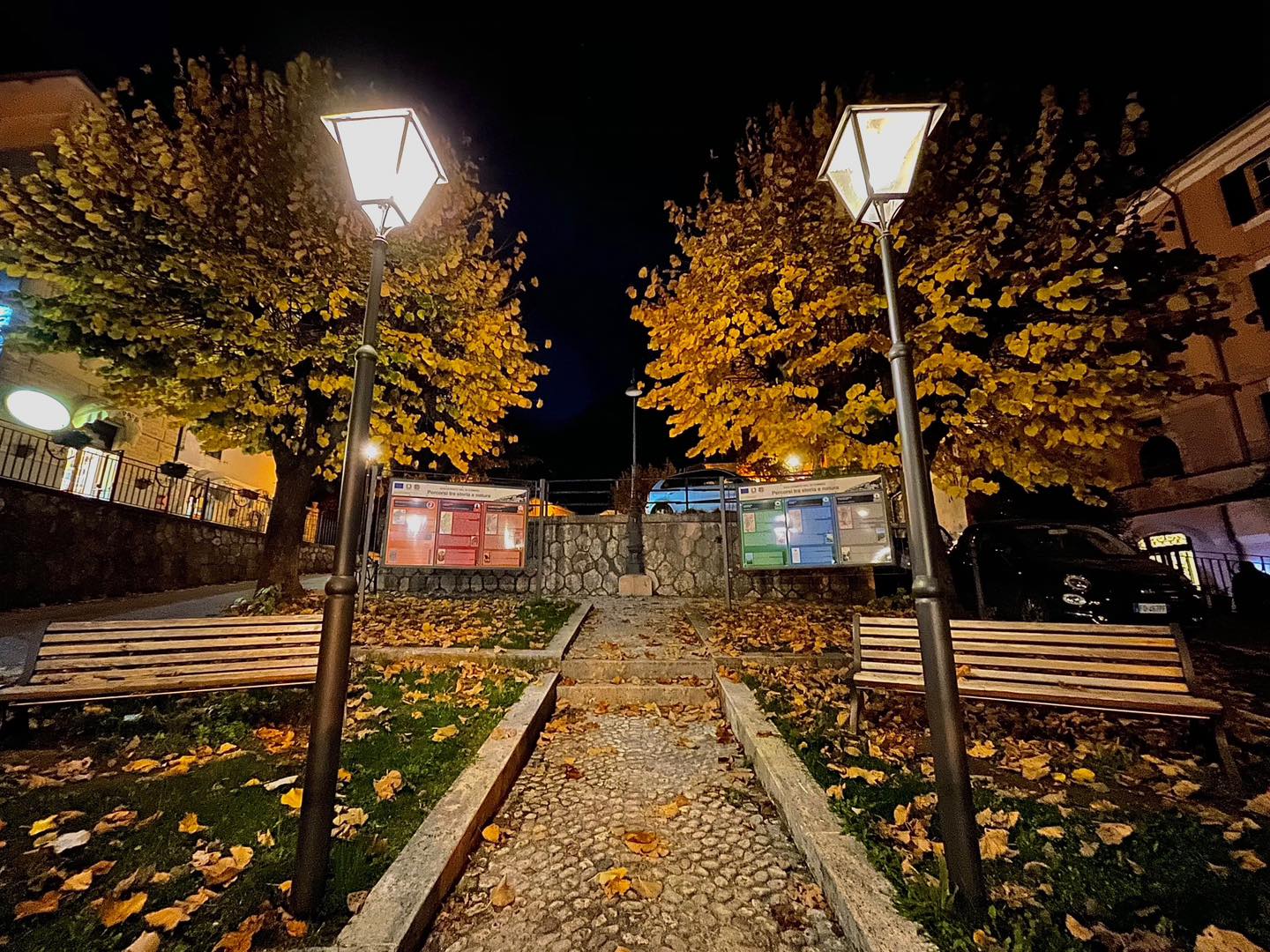
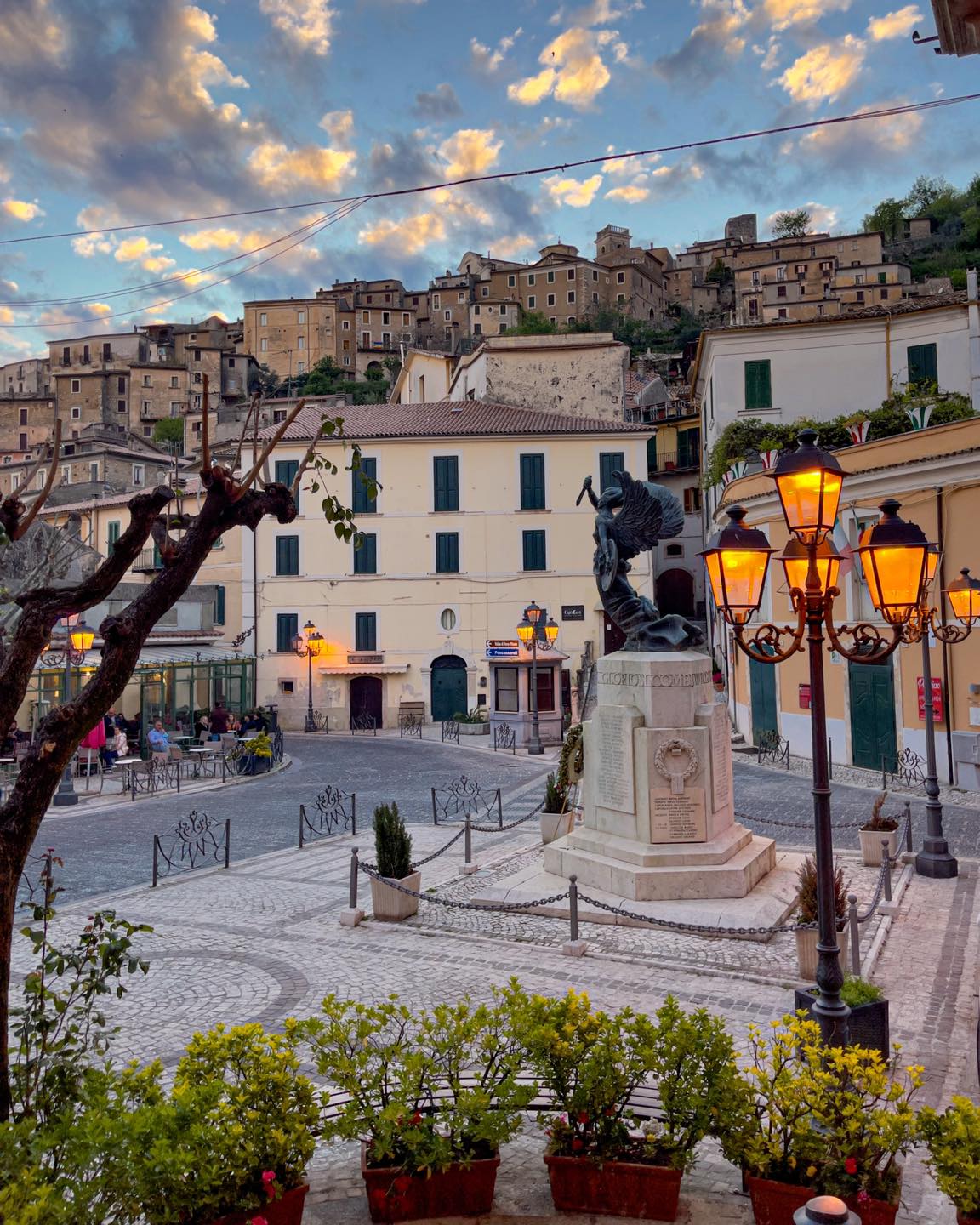
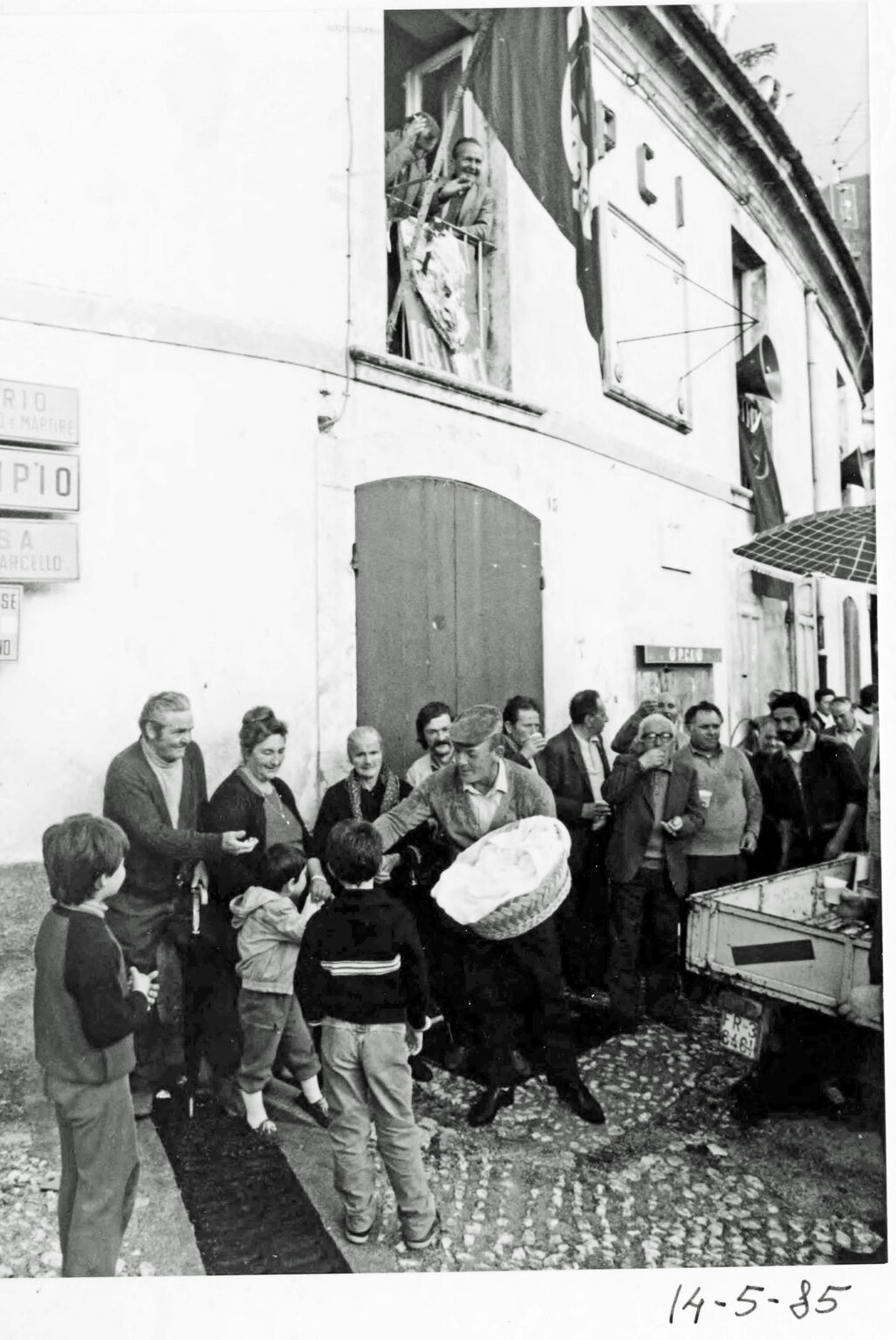
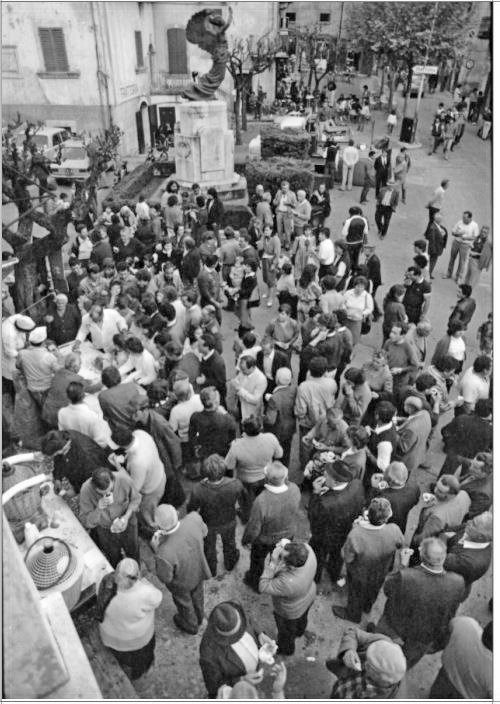
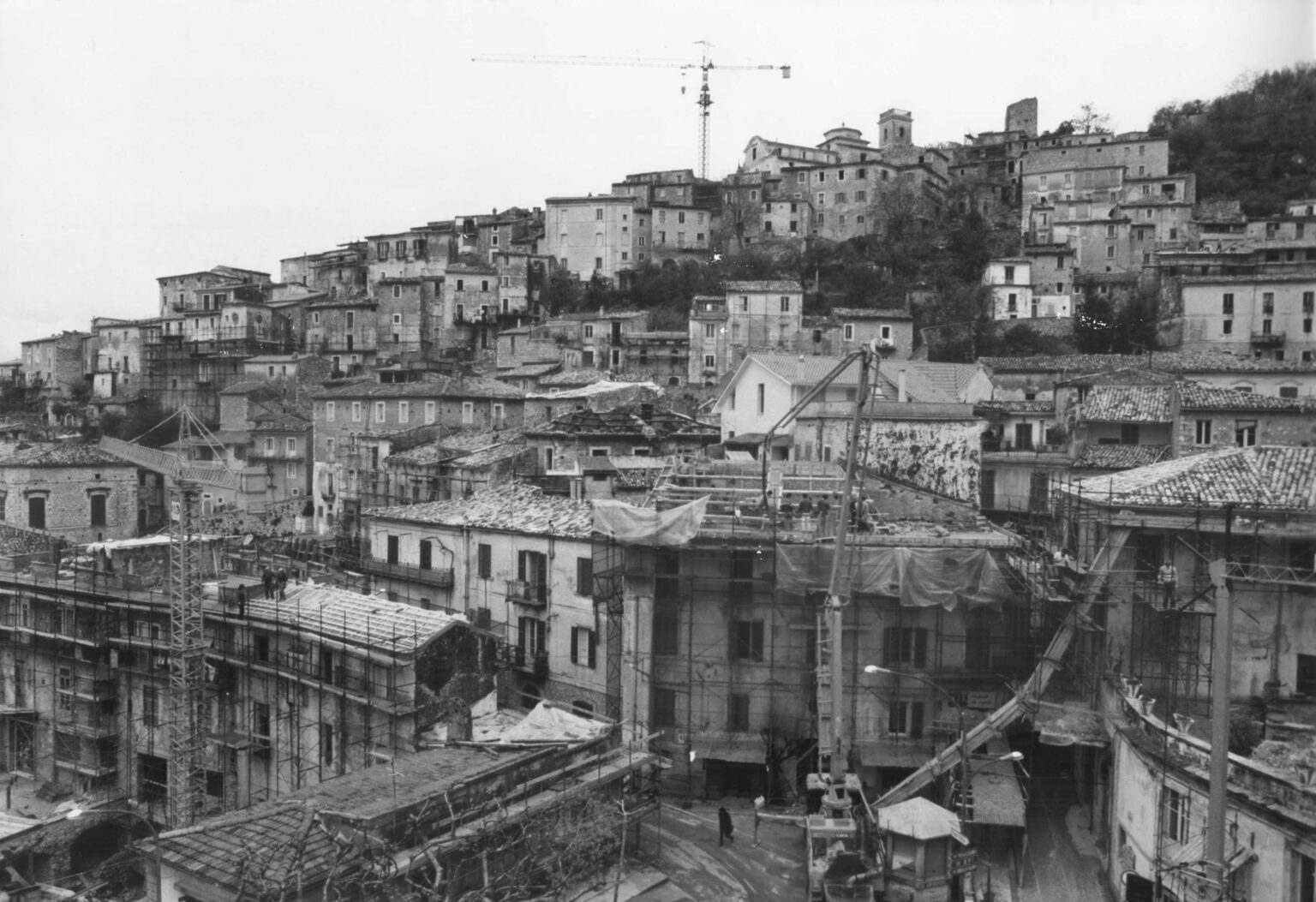
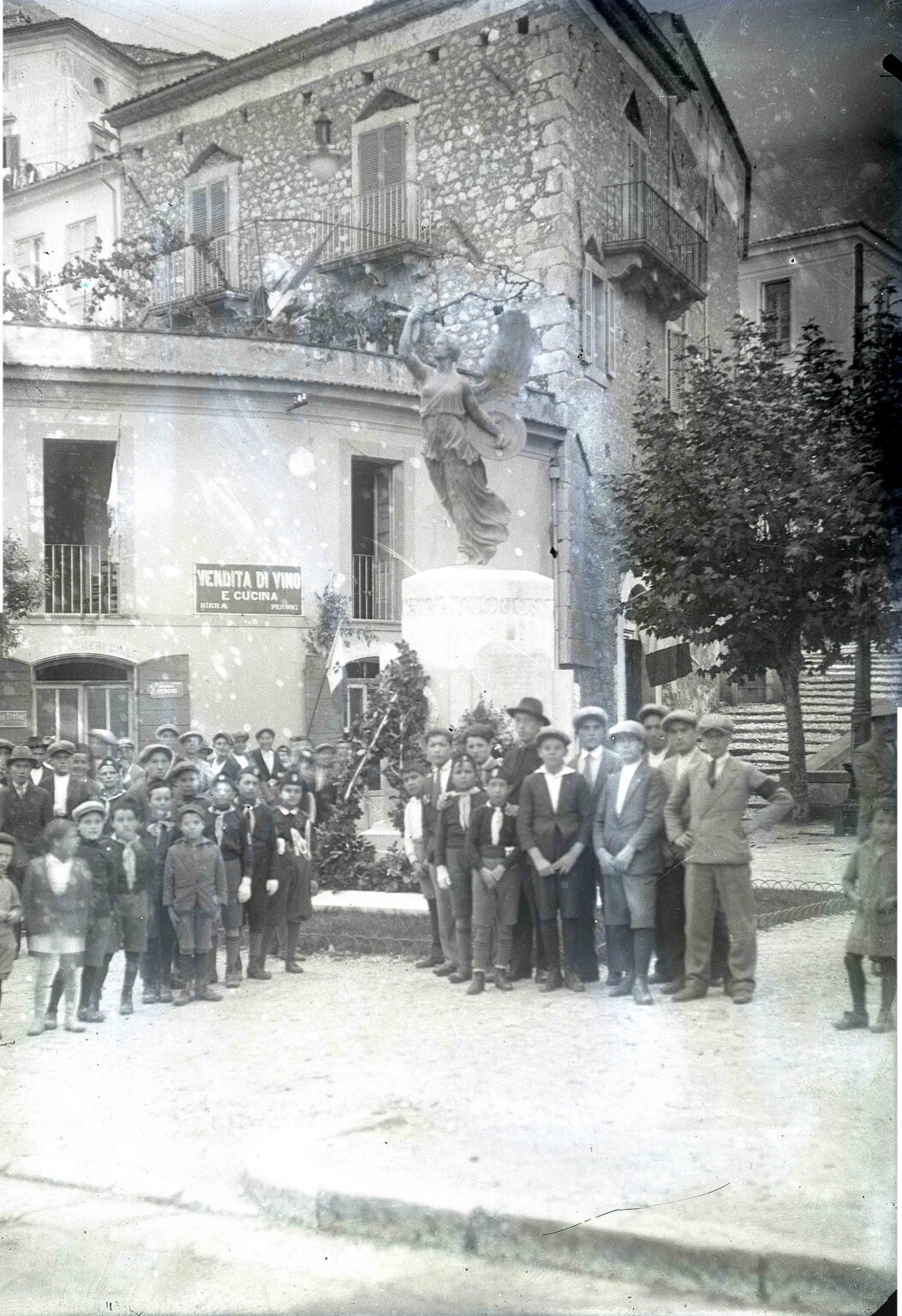
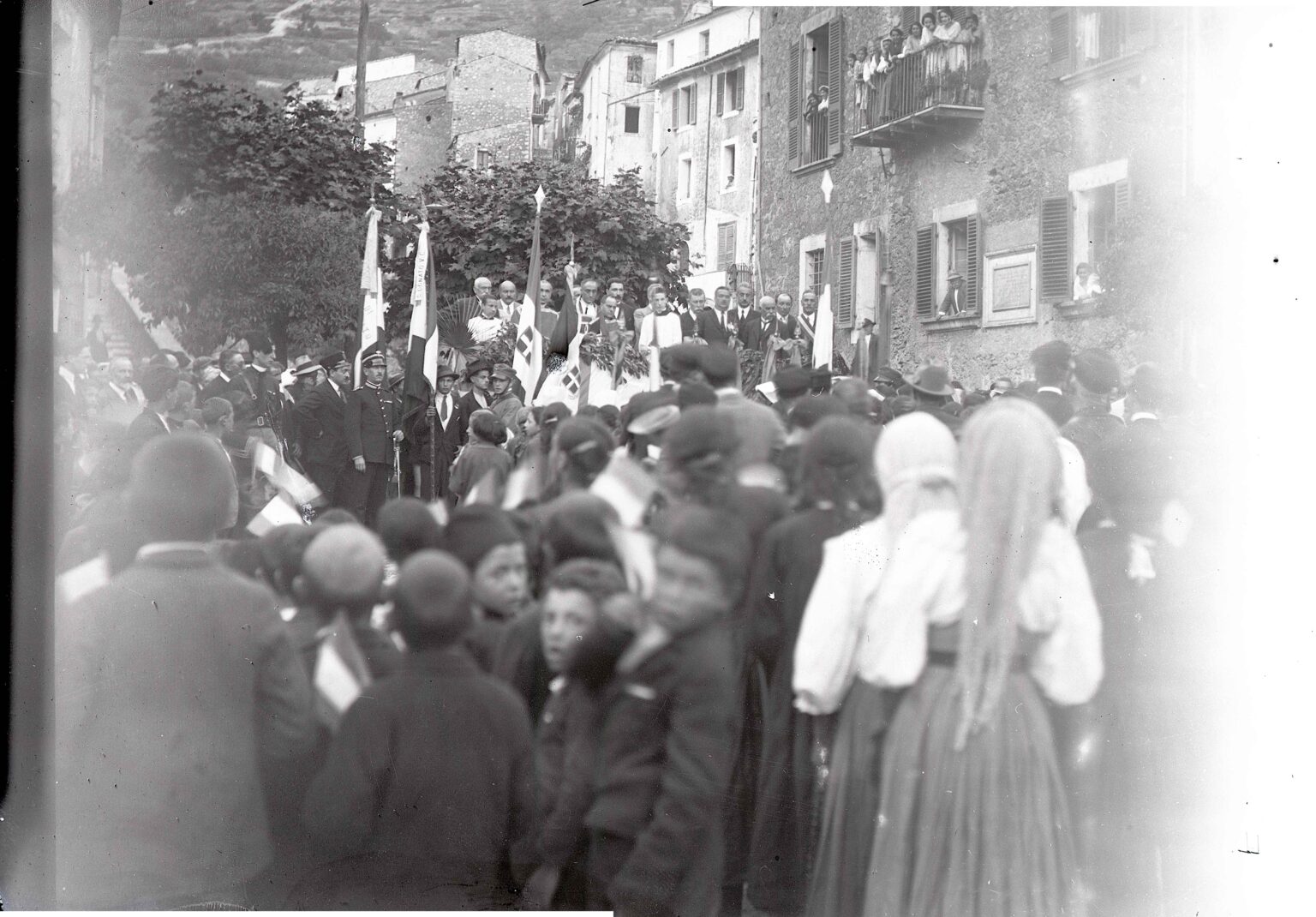
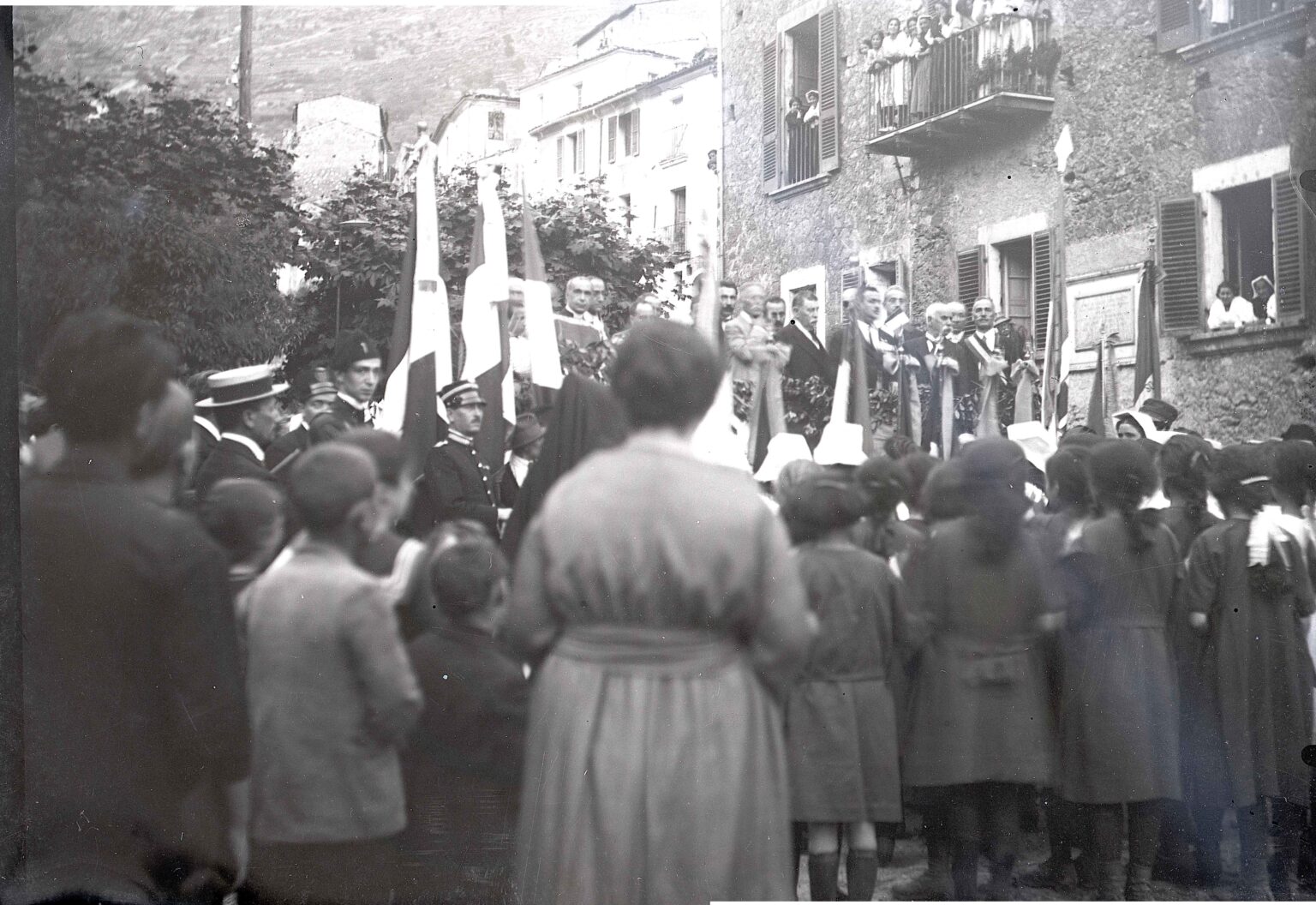
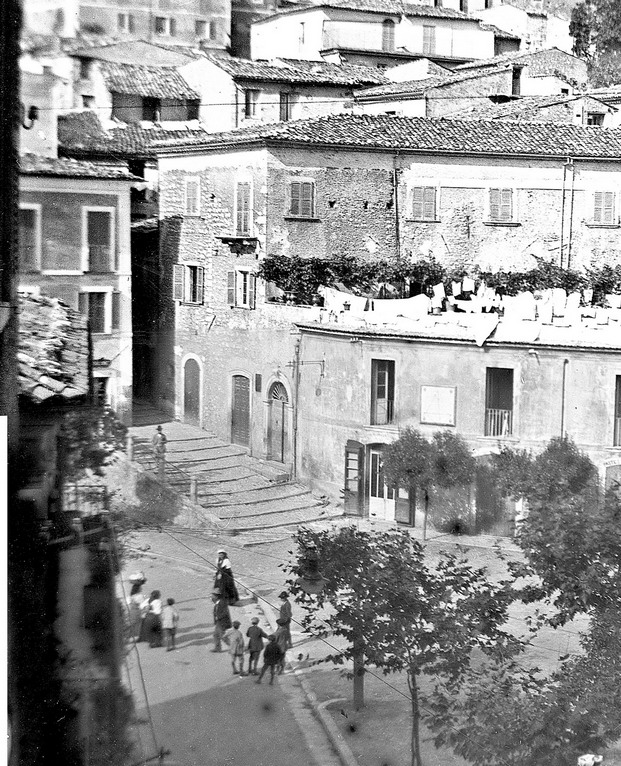
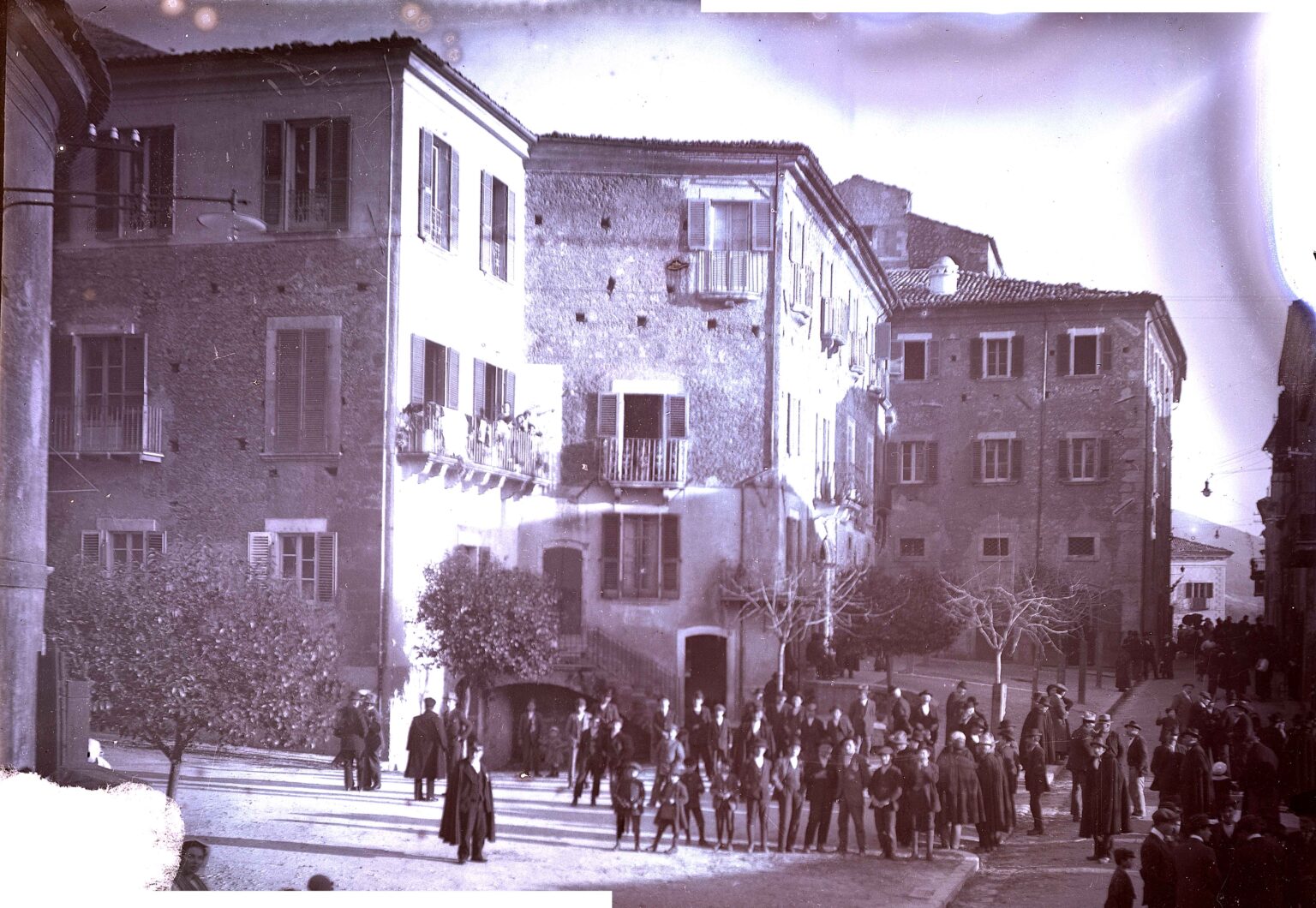
Commonly called "the square," in the past it was called Capo la Valle. It is still today the lugo where the main city streets meet, intersecting in turn with roads leading to Abruzzo. In addition to being the center of economic life, Carlo Coletti Square remains the symbol of political passion, as well as the social and cultural life of the people of Sandonatas.
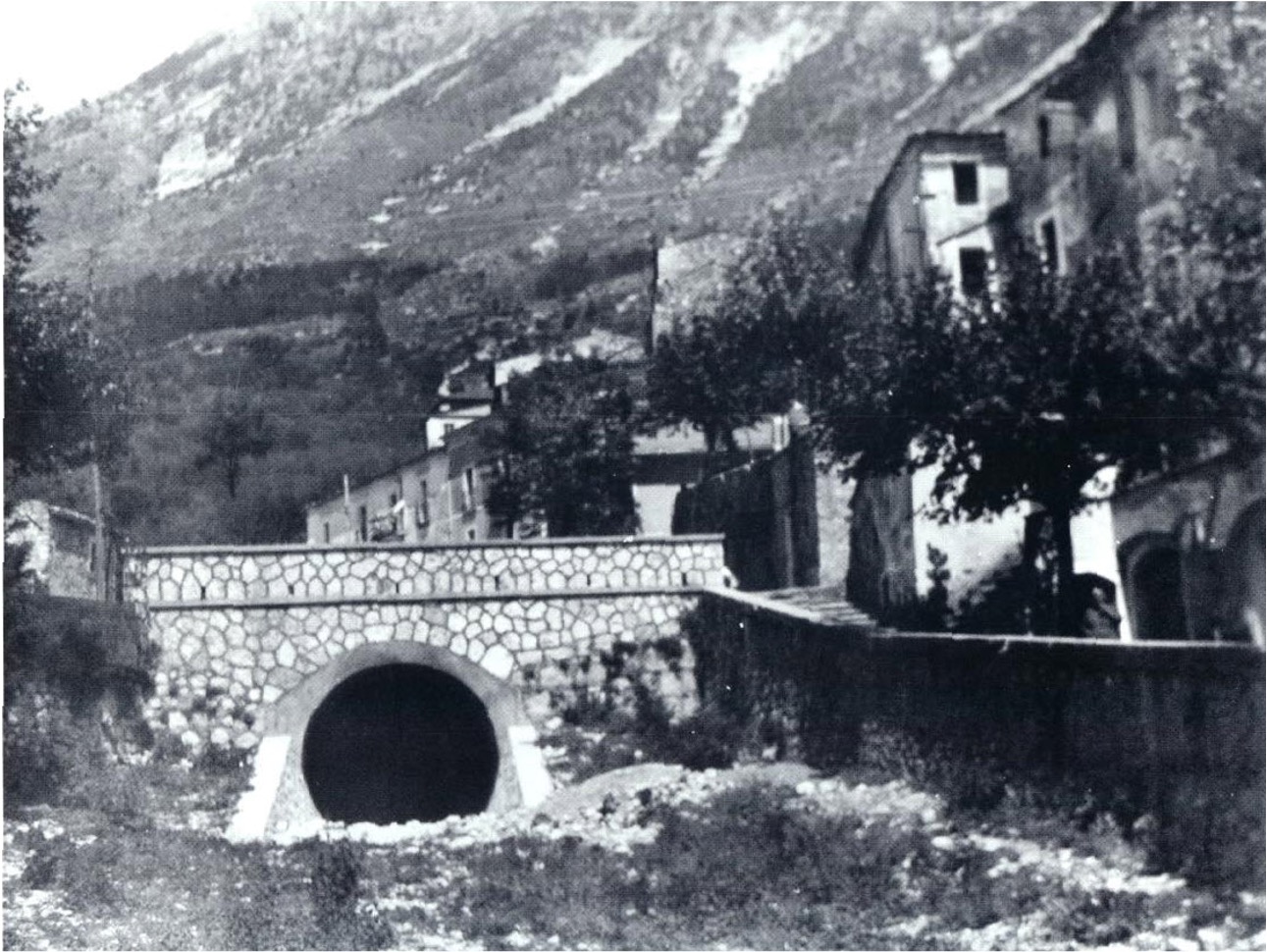
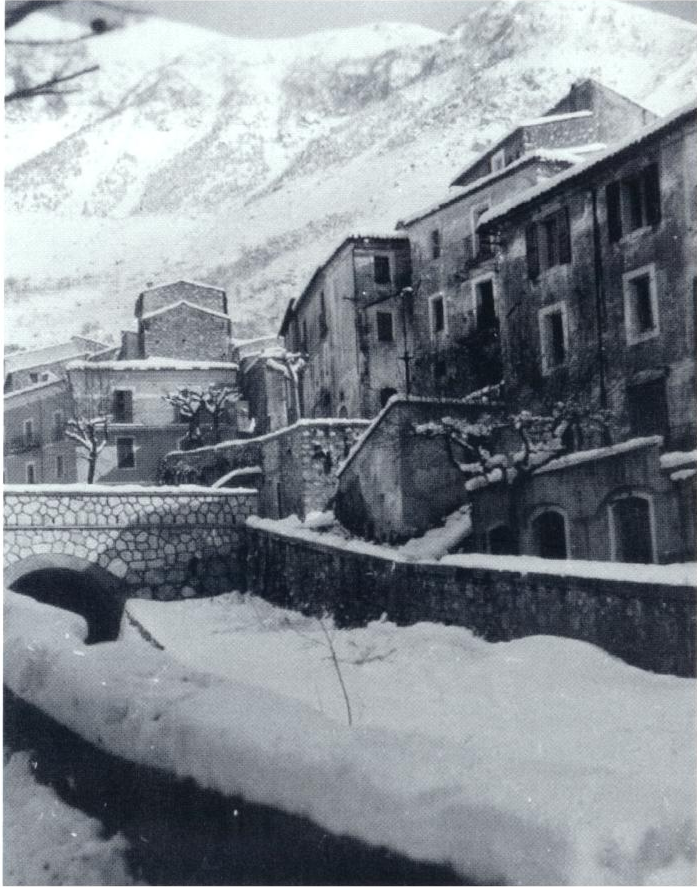
After damage from the terrible flood of 1798, Mayor Carlo Coletti had the creek covered with a wide bridge, creating the present square in 1886. A plaque placed behind you commemorates the feat. In the following years, to defend against further flooding and improve connections, high walls and the characteristic stone bridges were built along the creek.
Carlo Coletti (1828-1893) was mayor of San Donato from 1870 to 1893. During his term he initiated major public projects that would modernize the town. These included: the road to Gallinaro (1873), the road to Alvito that would develop the Covento and Portella districts (1874), the Carabinieri station (1874), public lighting (1875), the municipal aqueduct (1884), the town hall in Via Orologio (1887), and the cemetery (1889).
Located in the heart of San Donato Val di Comino, Carlo Coletti Square represents a place of great historical and symbolic value for the community. This square bears the name of Cavaliere Carlo Coletti, an enlightened mayor and leading figure of the 19th century whose commitment to the development of the town left an indelible mark on local history.
Carlo Coletti was born into an influential family, the son of Giovanni, a wealthy and respected local businessman, and Elisabetta Salvucci, the daughter of a former mayor of San Donato. After studying at the Royal College of Arpino and earning a law degree from the Federico II University of Naples, Carlo returned to San Donato, where he became a central figure in the political and social life of the town. Elected mayor in 1870, he remained in office for more than 20 years, during which time he devoted himself passionately to the betterment of the community.
Thanks to his leadership, San Donato Val di Comino underwent a significant transformation. Coletti initiated major public works, such as the modernization of roads and the construction of new arteries connecting with neighboring municipalities. Among his most significant projects was the implementation of the water system, which brought potable water to the town, radically improving the quality of life of the inhabitants.
Carlo Coletti Square, once known as Capolavalle Square, was precisely one of the urban spaces that Coletti helped transform. Strategically located, the square became a nerve center for the town's social and economic life. Its renovation, part of the mayor's modernization plan, made it a meeting point for residents, where markets, events and demonstrations were held.
In 1876, King Victor Emmanuel II awarded Carlo Coletti the title of Knight of the Order of the Crown of Italy in recognition of his contributions to the community. After his sudden death in 1893, the square was renamed in his honor. The people's esteem for Coletti is also reflected in the marble bust dedicated to him, created in 1905 and placed in the council chamber of the town hall.
Today, visiting Carlo Coletti Square, one can sense the legacy of the mayor who transformed San Donato Val di Comino into a modern, livable place. The square, with its quiet and authentic atmosphere, is an ideal starting point for exploring the ancient village and immersing oneself in local history.
The Sundial
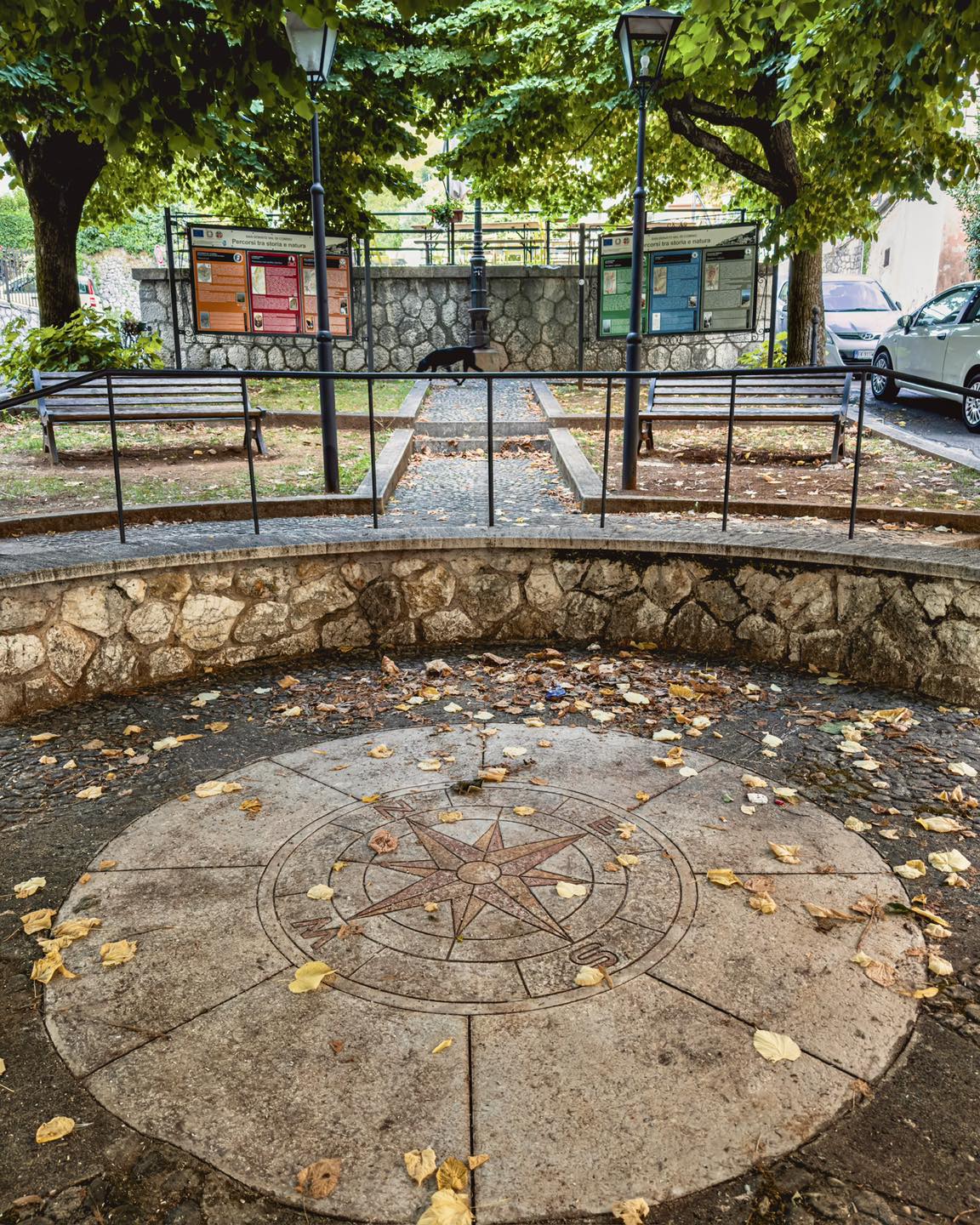
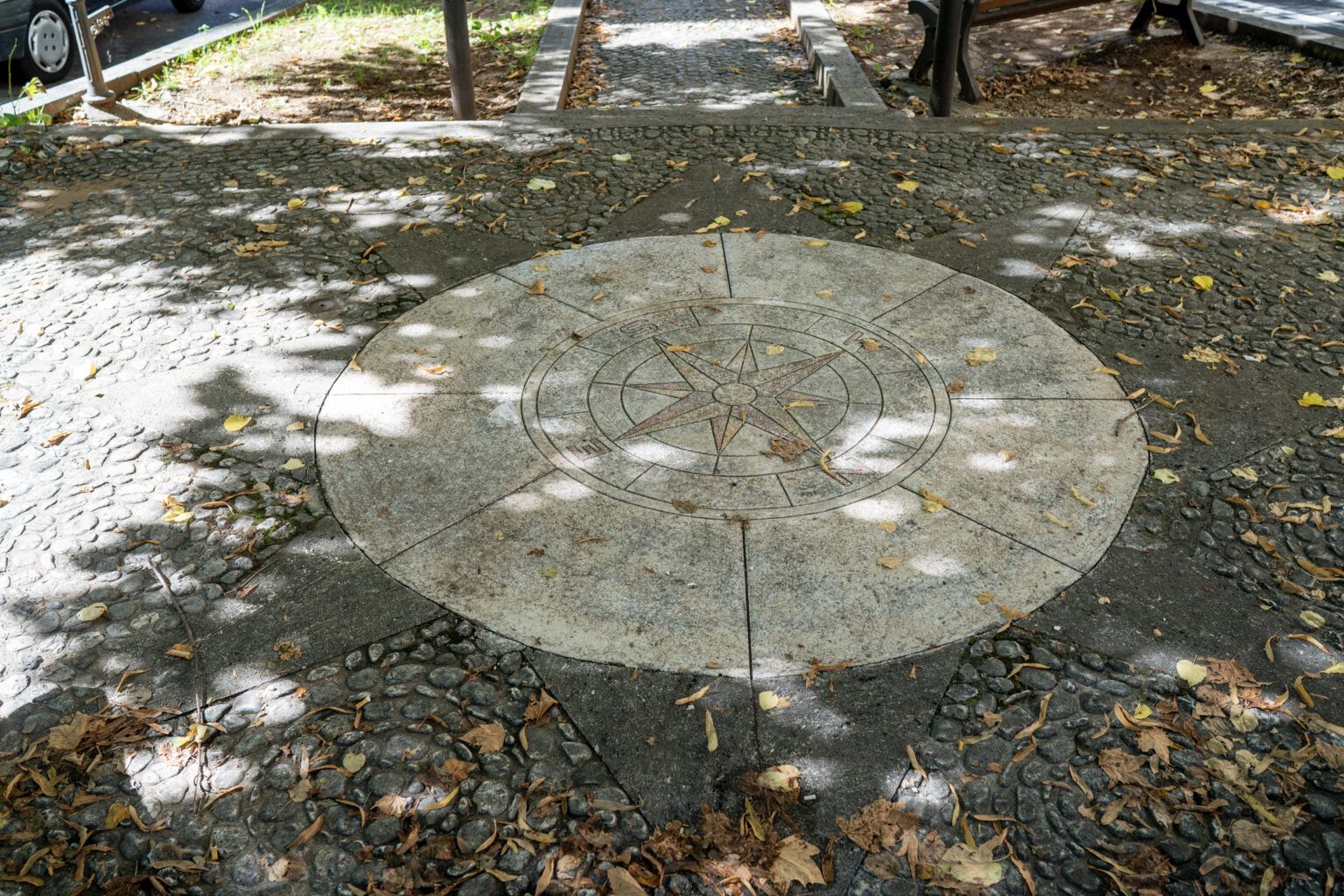
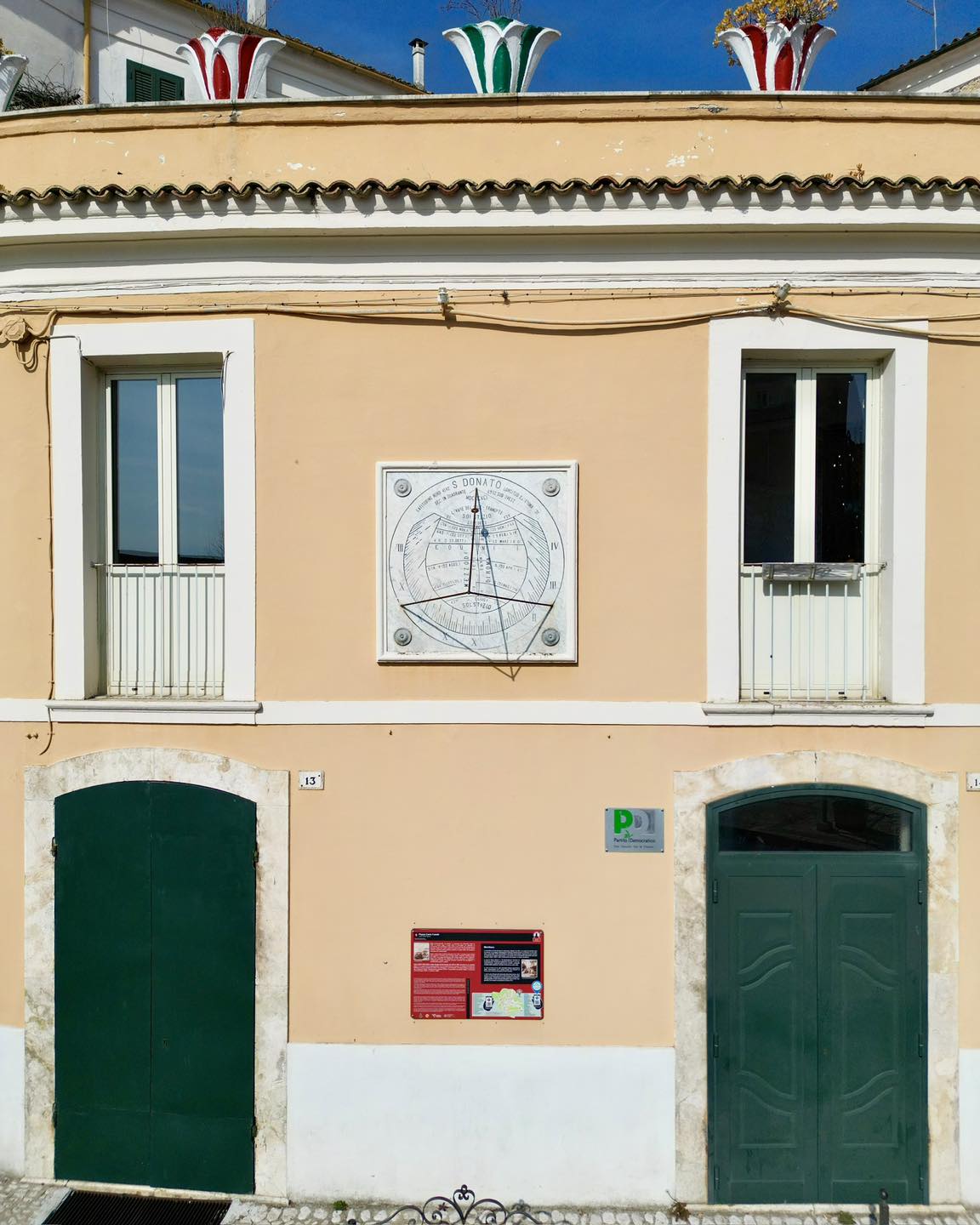
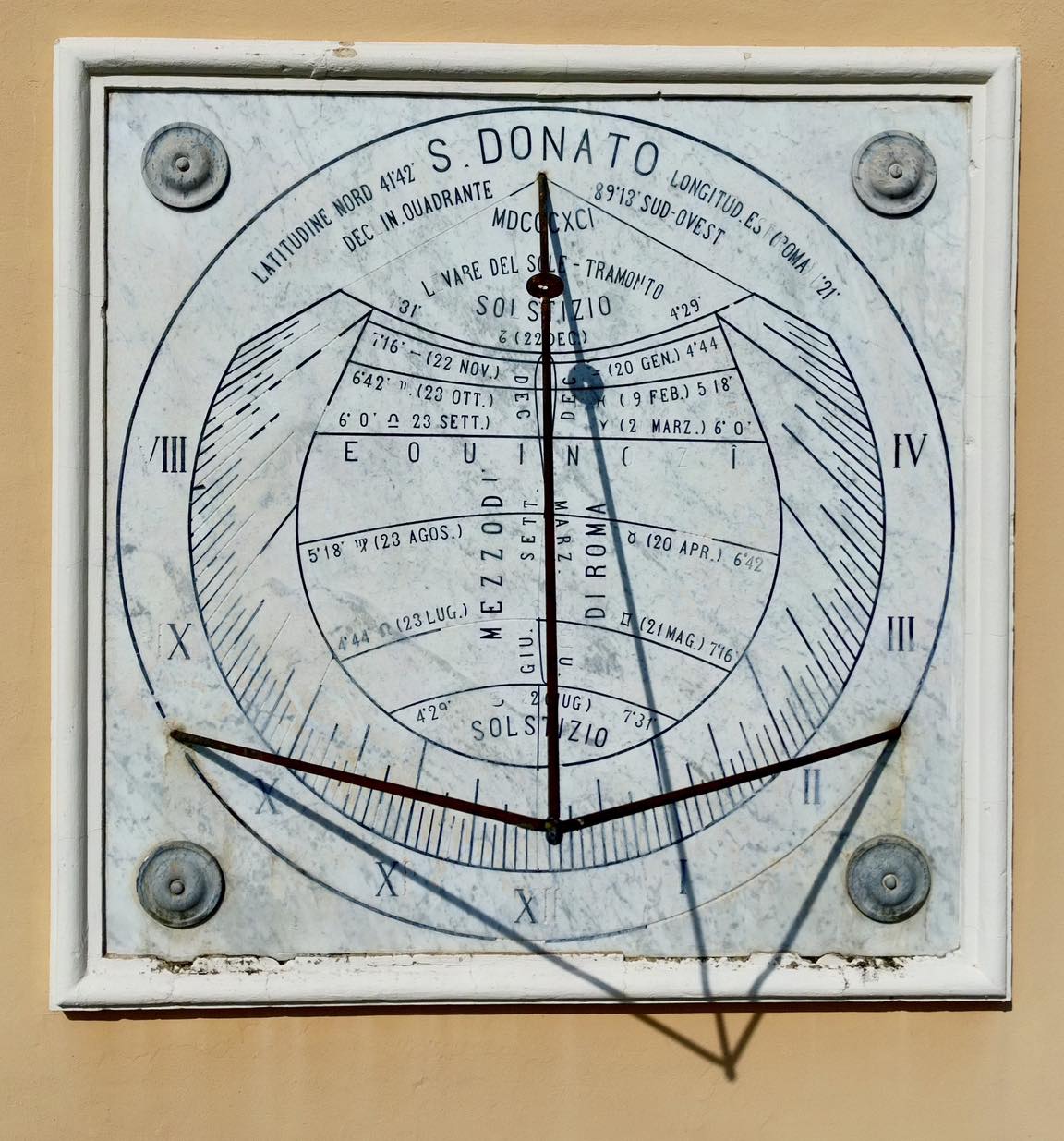
The Sundial located in Carlo Coletti Square, is a valuable example of art and science. Built in Naples in 1891 on a design donated by engineer Gaetano Musilli to the city, it was constructed by casting lead on marble and dominates the ancient "Capolavalle."
The hours indicated range from 7:30 a.m. antidawn to 4:30 p.m., with five-minute intervals. Local time is determined by the shadow cast by the stylus, a thin central rod.
Beyond the indication of time, the sundial:
- with "diurnal lines" or "declination lines" provides the trajectory of the sun's apparent diurnal motion at various times of the year-such as equinoxes and solstices-by shadowing the perforated round plate placed on the stylus;
- with the shape of an elongated figure eight (a geometric figure called a "lemniscate") gives the average noon time in Rome, which is different from that of St. Donatus;
- with the times indicated at the ends of the diurnal lines, gives the rising and setting of the sun in reference to the dates of the individual lines.
Complementing this magnificent work are the geographical data of San Donato (latitude north 41°42'; longitude east from the meridian of Rome 21').
The Sundial is a testament to the engineering talent of the time and an enduring symbol of local history between science and art.
 Italiano
  English
 Français
 Español
 Português